
Digital Safety & Legal Literacy During Elections | Kamagara Editah
During election periods, online spaces can become even more hostile—especially for structurally silenced communities. Surveillance increases, misinformation spreads, and laws are sometimes misinterpreted or deliberately applied in ways that place vulnerable people at risk.
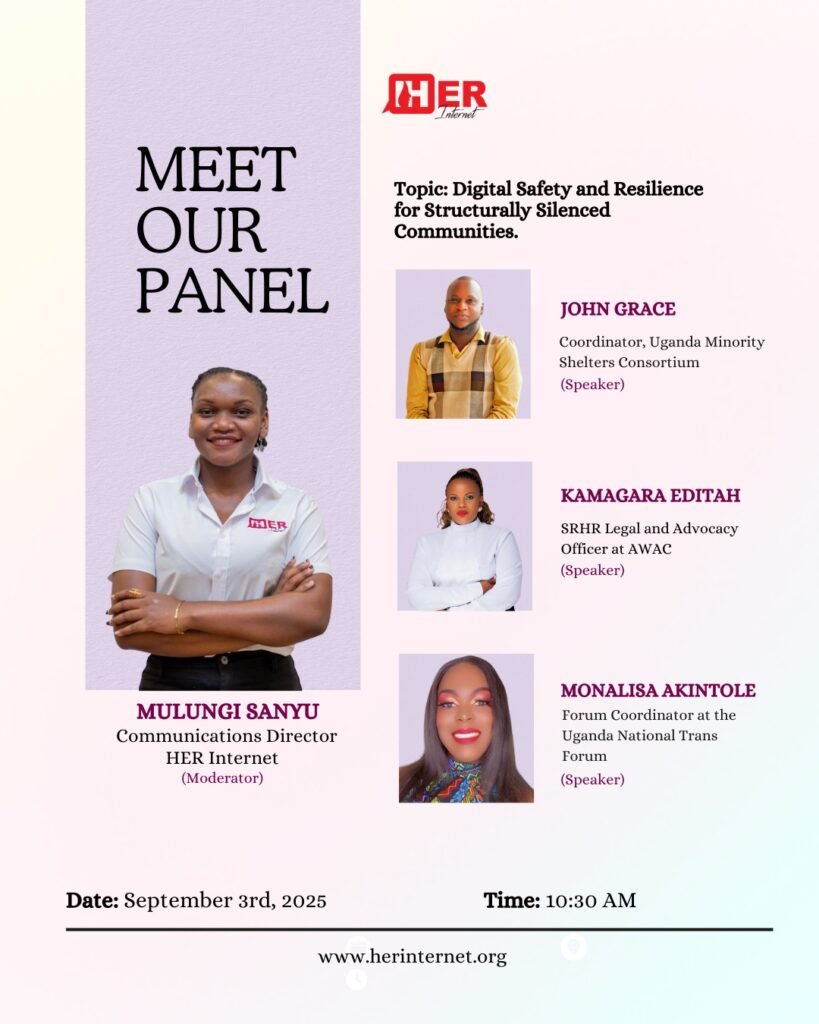
I recently participated as a panelist in the Her Internet session on digital safety and resilience for structurally silenced communities, contributing to an important conversation about how we can remain safer online while protecting our rights and our voices.
How laws are weaponized in digital spaces
One reality we must speak about honestly is that law is not only enforced—it can also be used as a tool of intimidation.
As I shared during the session:
“During the election period, we see a lot of online surveillance… laws like the Anti-Homosexuality Act are misinterpreted and used against our communities. Many face illegal arrests and delayed justice as cases are paraded in court but never tried.”
This pattern does not only harm individuals. It also weakens trust in justice systems, encourages fear and silence, and shrinks civic space for communities already facing disproportionate targeting.
Why legal literacy is a form of protection
Digital safety is not only about devices and passwords—it is also about understanding how systems work, including legal systems.
Many people assume that not knowing the law will protect them, but that is rarely how enforcement works. This is why legal literacy matters.
As I reminded participants:
“Ignorance is not a defense but the language you use while communicating is what matters. What you post and how you post it could determine whether the law is used to criminalize you.”
This is not a call to silence. It is a reminder to communicate intentionally, reduce unnecessary exposure, and protect ourselves and others in environments where the law may be applied unfairly.
Practical takeaways for safer online engagement
Here are a few practical reminders from the conversation—especially for sensitive periods such as elections:
Assume online spaces may be monitored, and plan your communication with that reality in mind.
Be intentional with language—how a message is framed can influence how it is interpreted.
Limit identifiable personal information on public platforms where possible.
Document threats, harassment, or coercion and seek support early.
Practice community-centered digital safety—what feels like a simple post can have consequences for others too.
Community involvement and continued commitment
Being a panelist in this session reflects my continued commitment to community engagement, legal empowerment, and rights-based advocacy—especially for people and communities who are structurally silenced, criminalized, or pushed to the margins.
Digital spaces should not become traps. With stronger awareness, practical digital resilience, and improved legal literacy, we can navigate online spaces more safely—while continuing to advocate for dignity, justice, and human rights.