
HIV Workplace Discrimination & Equal Opportunities | Kamagara Editah
Challenging Workplace Discrimination: Reflections from the EOC Mediation on HIV-Based Dismissal
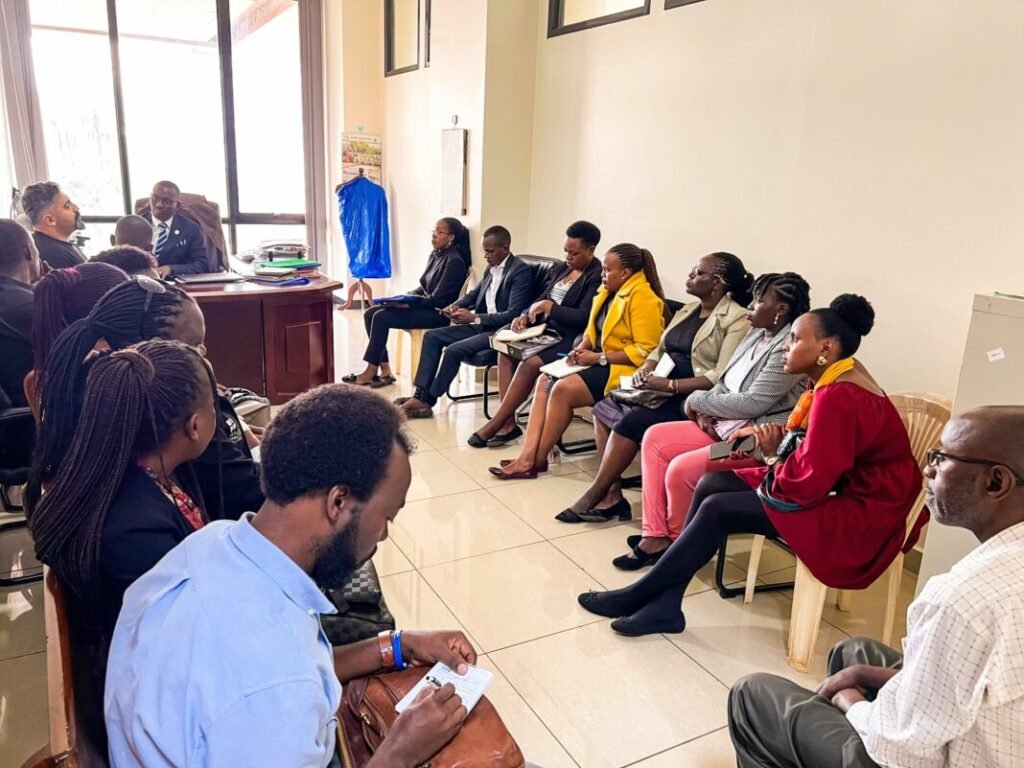
On Tuesday, 22nd October 2024, the Equal Opportunities Commission (EOC), acting under its mandate provided by Article 32 of the Constitution of Uganda, convened its first mediation session to address a case involving alleged workplace discrimination based on HIV status.
The case concerns Summa Construction Company, a Turkish firm undertaking stadium construction in Hoima, and the dismissal of Ms. Daphine Kobusingye, a local worker, following mandatory HIV testing imposed on employees.
The role of the Equal Opportunities Commission
The mediation session was presided over by Commissioner Kakooza Xavier Ntensibe, who guided the parties through discussions aimed at resolving the dispute amicably. The EOC’s intervention underscores its constitutional role in addressing discrimination and promoting equal opportunities for marginalized groups.
This case has attracted significant attention from human rights defenders, legal practitioners, and civil society organizations, given its implications for workplace practices and the rights of persons living with HIV.
My contribution as Counsel for AWAC
I participated in the proceedings as Counsel representing the Alliance of Women Advocating for Change (AWAC). In my submission, I emphasized the broader significance of the case beyond the individual dispute.
“As we continue to push for justice, this hearing is a firm reminder of our commitment to ensuring zero discrimination for all marginalized persons, particularly those living with HIV.”
I further stressed that dismissing an employee on the basis of HIV status violates the right to work without discrimination, a principle firmly anchored in human rights law, labour standards, and constitutional protections.
Legal representation for the complainant
The complainant, Ms. Daphine Kobusingye, is represented by the Uganda Network on Law, Ethics, and HIV/AIDS (UGANET), led by Counsel Gracious Atuhaire.
Counsel Atuhaire outlined that the company subjected local workers to mandatory HIV testing, and subsequently terminated Ms. Kobusingye’s employment after learning of her HIV status—actions that are unlawful under Uganda’s legal framework.
“Such actions are unacceptable under Uganda’s laws, and we are here to ensure justice is served,” Counsel Atuhaire stated during the proceedings.
Mediation process and next steps
During the session, Summa Construction Company expressed willingness to explore an amicable settlement, a position that was welcomed by the Commissioner. The parties were granted time to pursue mediation, with a follow-up session scheduled for 31st October 2024.
Commissioner Kakooza further committed to formally requesting the company’s labour policies for review and urged both parties to utilize the mediation period constructively.
Should mediation fail, the matter will be referred to the EOC Tribunal for adjudication.
Case background: the human impact
Ms. Daphine Kobusingye, a 39-year-old single mother of four, had worked for only three weeks as a laundry attendant when she was instructed—alongside other local workers—to undergo medical examinations.
During the process, she disclosed that she had been on PrEP for seven years due to her HIV status. Without her consent, this confidential information was shared with management. The following day, she was dismissed, with her employer explicitly citing her HIV status.
Despite pleading to be reassigned, she was terminated in a manner that left her humiliated, distressed, and economically vulnerable.
Why this case matters
This case highlights a systemic challenge faced by many workers—particularly women—who may lack awareness of their rights and face exploitation by employers.
Civil society organizations have rallied in support of Ms. Kobusingye, viewing this matter as a critical precedent in the fight against HIV-based workplace discrimination and abuse of power by employers.
Closing reflection
Workplace discrimination based on HIV status is not only unlawful—it is inhumane. This case reinforces the urgent need for legal accountability, corporate responsibility, and stronger protections for marginalized workers.
As legal practitioners and advocates, we remain committed to upholding human dignity, advancing equal opportunities, and ensuring that no one is denied the right to work because of their health status.